


Course details
Motor Grader Operator Safety (OSHA)
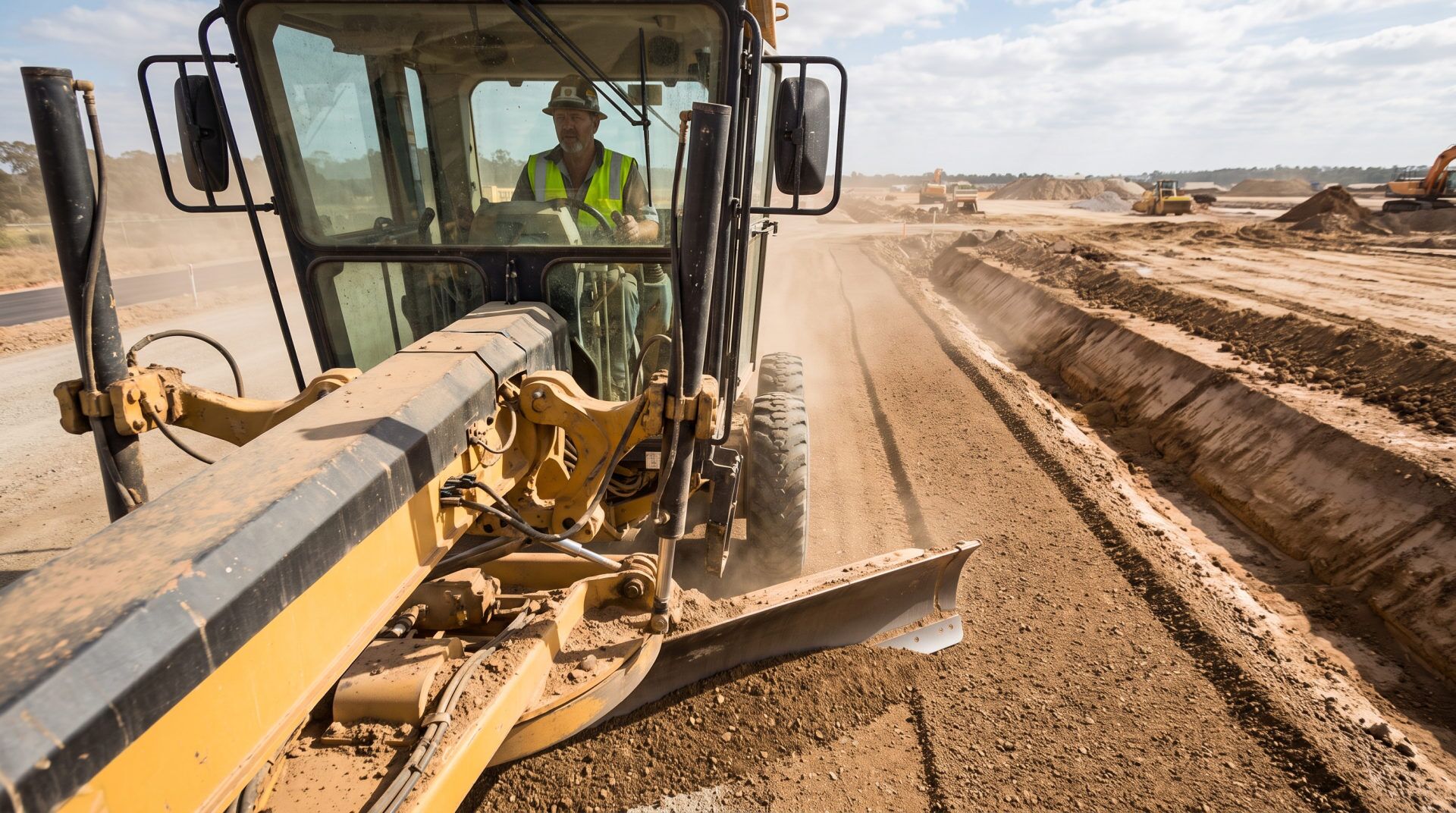
Motor grader operators manage a long, heavy machine across slopes, shoulders, and live traffic corridors where a single misjudgment carries serious consequences. This motor grader operator safety training course delivers the knowledge every operator needs before they climb into the cab: how the machine is built, what keeps it stable, and how to identify and control the hazards that come with the job.
The course walks you through pre-operation inspection steps, blade and frame adjustments, slope and edge hazards, traffic management, and the hierarchy of controls, giving you the knowledge to act the moment you return to the field.
Course Overview
This motor grader operator safety course is built around learning modules that move from regulatory context and machine fundamentals through to real-world operating hazards. Each module appears below exactly as it does in the course:
- Training, Standards, and Roles
- Motor Grader Anatomy and Key Components
- The Frame, Moldboard, and Blade Adjustments
- Controls and Instrumentation
- Stability and Center of Gravity
- Working on Slopes and Near Edges
- Personal Protective Equipment
- Pre-Operation Inspection
- Safe Operating Practices, from Start-Up to Shutdown
- Common Operations, Traveling, and Transport
- Working Around Traffic
- Hazard Identification and the Hierarchy of Controls
You learn what the machine is and how it behaves before working through the conditions and tasks that put it and the people around it at risk. Practical topics such as blade adjustments, instrumentation, and pre-operation inspection are covered in enough detail that you can apply the procedures on the actual machine, not just recall them on a quiz.
Know the machine, read the ground, and control the hazard.
What You'll Learn
This motor grader safety training covers five capability areas, from machine anatomy through hazard control.
Machine anatomy and component function
- Describe the main components of a motor grader and explain the specific function each part performs during road and earthmoving operations.
- Identify the frame, moldboard, and blade configurations and explain how each adjustment changes what the machine can do on a given surface.
Stability and balance on the grader
- Explain how a grader maintains its center of gravity on level ground and identify the physical factors, load distribution, slope angle, and terrain type, that shift that balance toward a tip or rollover.
- Recognize the operating conditions and machine positions that place a grader at the highest stability risk and apply the practices that keep it upright.
Pre-operation inspection steps
- Identify each step of a structured pre-operation inspection and work through the checks in the correct sequence before the machine starts.
- Demonstrate how to evaluate controls, instrumentation, and PPE requirements as part of the inspection routine.
Hazard recognition for grader operators
- Recognize the major hazards associated with grader operation, including slope and edge work, proximity to traffic, and blind-spot risks.
- Describe how working on shoulders, ditches, and live roadways creates layered hazards that require more than one control at the same time.
Hazard controls and course completion
- List the controls used to manage each identified hazard and apply the hierarchy of controls to prioritize which measures are implemented first.
- Identify the PPE relevant to motor grader operation and explain how it fits into the broader control framework.
- Achieve a passing score of 80% on the end-of-course assessment to earn a certificate of completion documenting your motor grader operator safety training.
Verified knowledge, documented completion, and a credential ready for the site.
Who Should Take This Course?
- Motor grader operators who need documented knowledge training before operating on road construction, grading, or earthmoving projects.
- New equipment operators transitioning into a grader role who need a structured grounding in machine anatomy, stability, and safe operating procedures.
- Site supervisors and foremen who oversee grader operations and need to understand the hazards, inspection requirements, and controls their operators follow.
- Safety officers and HSE coordinators responsible for verifying that equipment operators have completed the knowledge component of their operator training.
- Equipment fleet managers who need a consistent, recordable motor grader safety training solution across multiple job sites or crews.
- Construction and civil works employers who want a cost-effective way to deliver and document grader safety training for their workforce.
Why Take This Course?
Motor graders work in the most demanding conditions on any site. Slopes, road shoulders, ditches, and active traffic lanes create a combination of hazards that escalate quickly when an operator lacks the knowledge to recognize and respond to them.
A rollover or struck-by incident has immediate, severe consequences, and an operator who understands stability physics, knows the inspection checklist, and can apply the hierarchy of controls is measurably less likely to put themselves or a co-worker in a dangerous position. OSHA's earthmoving equipment standards establish the baseline. This course builds the knowledge behind those requirements.
Understanding the "why" changes how operators perform. This course explains the reasoning behind each safety practice, not just the rule itself. Operators who know why a procedure exists apply it correctly when site conditions shift and the textbook scenario no longer matches what's in front of them.
Documented training protects your crew and your records. Employers who record completed safety training create a verifiable file that the knowledge requirement was addressed, a practical safeguard when incidents are investigated and training records are reviewed. BIS Safety's Training Record Management tools make storing and retrieving those records straightforward.
Key Benefits
- Certificate of completion included. Operators receive a shareable credential that documents successful motor grader operator safety training, ready for the personnel file or a site audit.
- Slope, edge, and traffic hazards covered in full. Operators finish knowing the specific conditions that cause grader incidents and the controls that prevent them, reducing the likelihood of a serious on-site event.
- Completed in 60 minutes, entirely online. No travel, no classroom scheduling, and no crew downtime beyond a single hour per operator per enrollment.
- Knowledge grounded in machine mechanics. Because the course explains stability, center of gravity, and blade physics, what you learn transfers across different grader models and site conditions rather than expiring with one job.
- Priced at $99.99 per enrollment. A fixed, transparent cost that gives employers a documented training record for less than the cost of a single hour of unplanned equipment downtime.
Topics Covered
Course Details
- Course length: 60 minutes
- Format: Online, self-paced
- Pass mark: 80%
- Certificate: Certificate of completion included
- Price: $99.99
Frequently Asked Questions
How long does the motor grader operator safety course take to complete?
The Motor Grader Operator Safety (OSHA) course takes 60 minutes to complete. You can finish it in a single session or return to it on your own schedule.
What score do I need to pass the motor grader safety training assessment?
You need a score of 80% or higher to pass. Operators who do not reach that mark can review the material and retake the assessment.
Is a certificate included when I complete the motor grader operator safety course?
Yes, the Motor Grader Operator Safety (OSHA) course includes a certificate of completion, issued after you pass the 80% assessment.
How much does the motor grader operator safety training course cost?
Enrollment is $99.99 per operator, with no hidden fees.
Who should take this motor grader operator safety course?
Motor grader operators, new equipment operators moving into a grader role, site supervisors, safety officers, HSE coordinators, and employers who need a documented knowledge training record for their workforce will all benefit from this course.
What topics does the motor grader safety course cover?
The course covers machine anatomy, frame and blade adjustments, controls and instrumentation, stability and center of gravity, slope and edge work, PPE, pre-operation inspection, safe operating practices from start-up to shutdown, common operations and transport, working around traffic, and hazard identification using the hierarchy of controls.
Enroll in the Motor Grader Operator Safety (OSHA) course today and give your operators the documented, job-ready knowledge they need before they run the machine.
This course takes approximately 60 minutes to complete
A passing grade of 80% or higher required. Up to 3 attempts are provided.
A certificate will be provided upon the successful completion of this course
