


Course details
Rigging and Signalperson (OSHA)
A misread hand signal or a worn shackle left in service can bring a load down in seconds. This rigging and signalperson training course is designed to cover the full skill spectrum, from basic inspection procedures through advanced load handling and signal communication, so workers can step onto US lift sites with the grounding to support a safe lift.
The course is built around real lift-site scenarios: condemned hardware, improperly balanced loads, and the communication breakdowns that put ground crews at risk. Workers who complete this rigging and signalperson online course can receive a documented credential and are assessed on the skills covered in the material.
Course Overview
Rigging and signalperson training covers every stage of a safe lift operation, from the first equipment check through final load placement. This course addresses the specific knowledge areas that determine whether a lift proceeds safely or stops before something fails.
The course modules cover:
- Universal hand and radio signals used to direct crane and hoist operators during a live lift
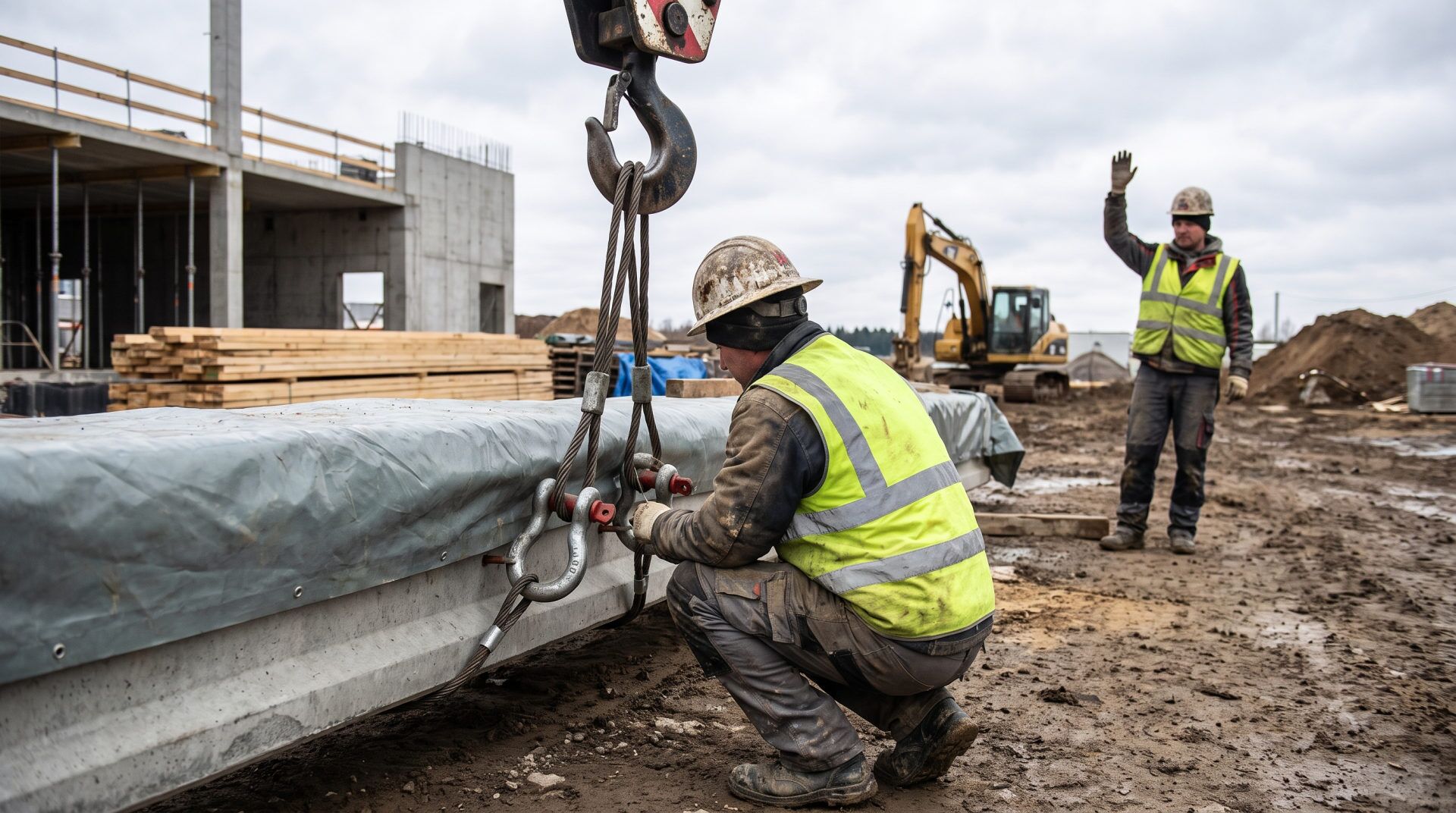
- The visual difference between serviceable rigging hardware and components that must be pulled from service
- What a correctly rigged load looks like versus a configuration set up to fail
- Machine capability limits and how load ratings affect rigging decisions
- Pre-work inspection procedures for slings, hooks, shackles, and other rigging components
- Component breakdown hazards and the prevention steps that address each one
A single enrollment is designed to take workers from foundational knowledge through to advanced rigging and signalperson practice.
Inspections done, signals confirmed, and loads rigged correctly.
What You'll Learn
This course builds the specific skills riggers, signal persons, and lift crew members need each time a hook goes up.
Signal communication and lift coordination
- Identify the universal hand and radio signals used to direct crane and hoist operators during a live lift.
- Apply correct signaling sequences to keep operators and ground crews coordinated throughout a complete lift cycle.
Operator training and readiness
- Describe how current, documented operator training may affect the safety of lifts the machine performs.
- Recognize the operational gaps that may arise when operator certification is outdated or incomplete.
Pre-work inspection of rigging components
- Demonstrate a structured pre-work inspection, identifying wear indicators that require a component to be removed from service.
- Evaluate slings, hooks, shackles, and other hardware against serviceable condition standards before any lift begins.
Component hazard recognition
- Identify the specific breakdown hazards present in rigging hardware and describe the prevention steps that address each one.
- Recognize the point at which a damaged component presents a load-drop risk and should be taken out of service.
Correct rigging practice and load handling
- Apply proper rigging techniques to match load configuration, attachment points, and rated equipment capacity.
- Work through the steps for rigging different load types so the lift is balanced and hardware is not overloaded.
- Describe procedures for moving and placing loads that keep workers clear of the swing radius and drop zone.
Assessment and completion
- Score 80% or higher on the final assessment to earn a certificate of completion for this rigging and signalperson course.
Who Should Take This Course?
- Riggers and signal persons. You attach loads, direct operators, and carry direct responsibility for meeting safe rigging standards on every lift.
- Crane and hoist operators. You need a working knowledge of rigging configurations, load limits, and signal protocols to operate safely within a lift team.
- Site supervisors and lift planners. You approve lift plans and are expected to verify that rigging setups, equipment condition, and crew communication meet operational requirements before work begins.
- Safety officers and site coordinators. You conduct site audits and review rigging inspection records, so recognizing what compliant rigging looks like in practice is a practical advantage.
- Maintenance and equipment technicians. You handle, store, and inspect rigging hardware, and you need to catch component wear before that hardware reaches a lift.
- New entrants to construction and industrial trades. You are building the foundational knowledge of crane operations and rigging that every US lift site expects you to have.
Why Take This Course?
Rigging failures follow predictable patterns. Worn hardware that was not pulled from service, loads that were not balanced before the hook went up, and signals misread under noise and pressure are the recurring causes. Each one is preventable with the right training.
One person's knowledge gap affects the whole lift zone. A worker who cannot distinguish a serviceable sling from a condemned one, or who does not know the universal stop signal, creates a hazard for every person standing in range. A dropped load means equipment damage, project downtime, and the real possibility of serious injury.
OSHA publishes guidance on rigging and signalperson competency. Workers in these roles are generally expected to demonstrate knowledge of signals, inspection procedures, and load handling. This course addresses those expectations directly, covering component inspection, rigging technique, machine capability awareness, and signal communication in a single session.
Organizations may find value in maintaining a documented training record. When rigging and signalperson training is current and assessed against a defined standard, that record supports site audits and incident reviews. BIS Safety Software's training record management tools make it straightforward to store and retrieve those completion records when they are needed.
Key Benefits
- Certificate of completion issued on passing. Workers receive a documented credential for their rigging and signalperson training that may support site records, audit reviews, and compliance documentation.
- Dropped-load incidents reduced. Workers who can identify condemned hardware and improperly rigged loads address leading causes of lift failures before the hook leaves the ground.
- 120-minute online format, no travel required. The entire rigging and signalperson online course is designed to complete in two hours with no classroom scheduling, no travel costs, and no shift disruption beyond the session itself.
- Skills that transfer across equipment and load types. The inspection procedures and rigging techniques covered here apply to different machine classes and load configurations, not only the specific equipment a worker uses today.
- Scored against a defined 80% pass standard. The course produces a verified, assessed outcome that organizations can reference during audits, not a self-reported attendance log.
Topics Covered
Course Details
- Course length: 120 minutes
- Format: Online, self-paced
- Pass mark: 80%
- Certificate: Certificate of completion included
- Price: $95.99
- Coverage: Basic, intermediate, and advanced rigging and signalperson material for US workplaces
Frequently Asked Questions
How long does the rigging and signalperson course take to complete?
The Rigging and Signalperson (OSHA) course runs for 120 minutes. You complete it in a single online session at your own pace, with no scheduled class times.
What score do I need to pass the rigging and signalperson online course?
You need a score of 80% or higher to pass. Workers who meet that threshold receive a certificate of completion.
Is a certificate included when I finish the rigging and signalperson training?
Yes, the Rigging and Signalperson (OSHA) course is designed to include a certificate of completion for learners who achieve the 80% pass mark on the final assessment.
Who should take this rigging and signalperson course?
This course is designed for riggers, signal persons, crane and hoist operators, site supervisors, safety officers, and anyone working in or around lift operations on US job sites.
Does this course cover both basic and advanced rigging material?
Yes, the Rigging and Signalperson (OSHA) course is designed to cover basic, intermediate, and advanced content in a single enrollment. You do not need separate courses for different skill levels.
How much does the rigging and signalperson OSHA course cost?
The course is priced at $95.99 per enrollment, which includes the full 120-minute course and the certificate of completion.
Enroll in the Rigging and Signalperson (OSHA) course now and earn your certificate of completion in 120 minutes.
This course takes approximately 120 minutes to complete
A passing grade of 80% or higher required. Up to 3 attempts are provided.
A certificate will be provided upon the successful completion of this course
