


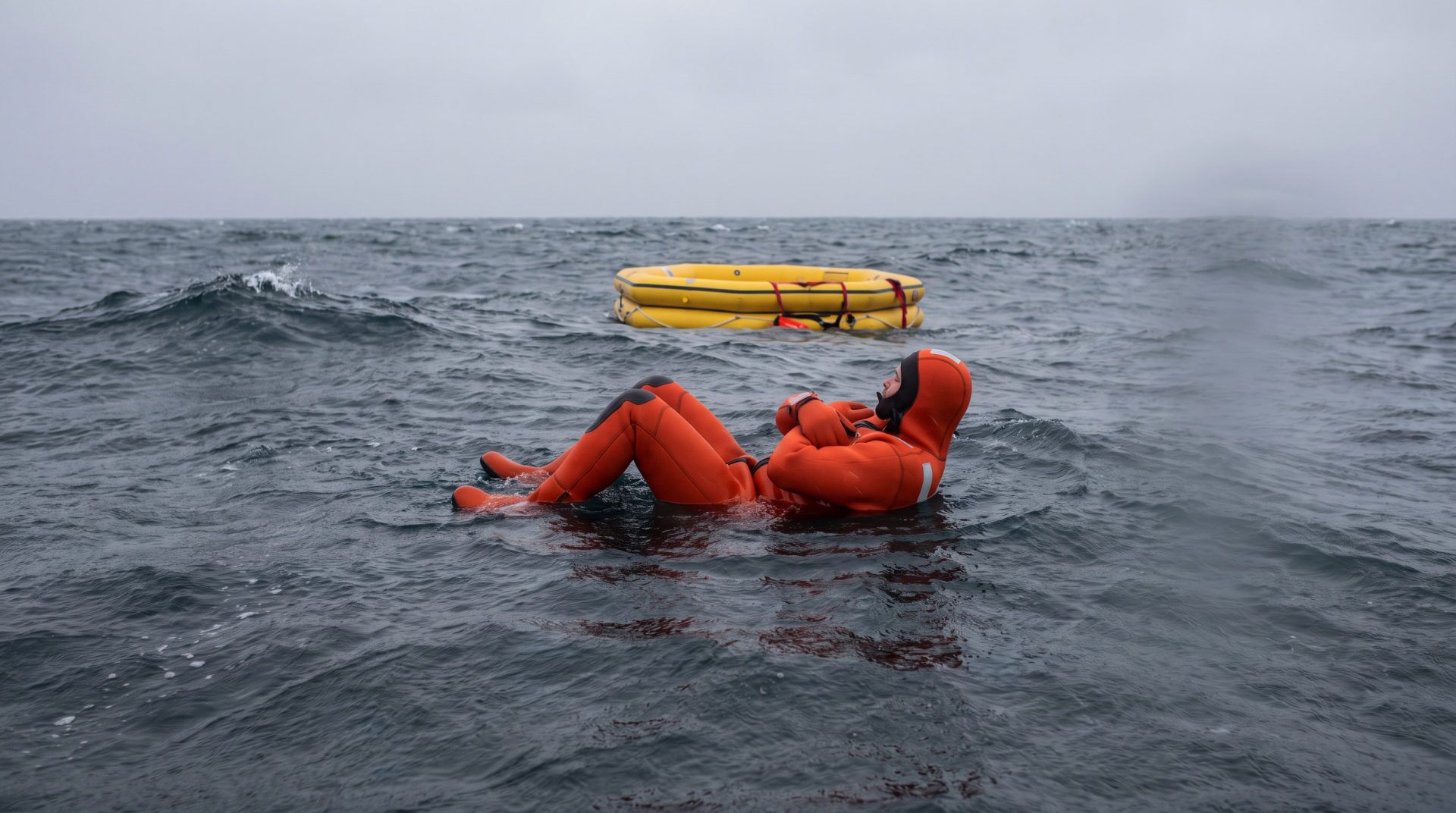
Course details
Maritime Cold Water Survival – OSHA
A worker who goes overboard in cold water has minutes, not hours, before the body begins to shut down. This maritime cold water survival training course gives workers on or near U.S. waters the knowledge to act correctly in those first critical minutes, covering immersion physiology, lifesaving equipment, and proven survival techniques.
Built for maritime workers, vessel crew, and anyone whose job puts them near open water, this course covers the stages of cold water immersion, correct use of survival equipment, and the right steps when an overboard incident occurs.
Course Overview
Maritime cold water survival training is built around learning modules that walk workers through every phase of a cold water emergency, from the first seconds of immersion to rescue and recovery. Each module addresses a distinct, actionable topic:
- The four stages of cold water immersion
- Cold shock and the 1-10-1 principle
- Swimming failure and hypothermia
- Post-rescue collapse and afterdrop
- HELP and HUDDLE positions
- Entering the water safely
- Lifejackets and personal flotation devices
- Immersion suits and thermal protective aids
- EPIRBs, PLBs, and the COSPAS-SARSAT system
- Flares and visual distress signals
- Life rafts and survival craft
- Steps to take if you go overboard
- Signaling rescuers effectively
- The United States' search and rescue system and U.S. Coast Guard Rescue Coordination Centers
The sequence moves from physiology to equipment to decision-making, so you first understand what cold water does to the body, then learn the gear you depend on, then practice the choices that determine whether a rescue succeeds.
Each module is self-contained, so you can return to a specific topic, how to don an immersion suit or how to deploy a flare, without restarting from the beginning.
Cold water. No warning. No second chance.
What You'll Learn
This course covers the physical realities of cold water immersion and the specific actions that keep a worker alive until rescue arrives.
Cold water physiology
- Describe the four stages of cold water immersion and the physical effects each stage produces on the body.
- Explain the 1-10-1 principle and apply it to estimate the time available for self-rescue after entering cold water.
Survival positions and water entry
- Identify the HELP and HUDDLE positions and describe when each position is the correct choice for a worker in the water.
- Describe the correct method for entering the water safely to reduce the risk of cold shock.
Lifesaving equipment
- Describe the purpose and key features of lifejackets, immersion suits, EPIRBs, flares, and life rafts used in American maritime environments.
- Recognize the role of PLBs and the COSPAS-SARSAT system in transmitting a distress signal to rescue coordinators.
Overboard response and signaling
- List the steps to take if you go overboard, in the correct order, to maximize the chance of survival.
- Describe how to signal rescuers effectively using visual distress signals and other available means.
Search and rescue coordination
- Explain the role of U.S. Coast Guard Rescue Coordination Centers in coordinating a maritime search and rescue response.
Assessment and completion
- Demonstrate course mastery by achieving the 80% pass mark on the final assessment to earn a certificate of completion.
HELP position. Immersion suit. EPIRB signal. Life raft entry.
Who Should Take This Course?
- Deck crew and vessel workers. You work on or adjacent to open water daily, and an overboard incident is a real operational risk on every voyage.
- Maritime safety officers. You are responsible for ensuring crew members can correctly use lifesaving equipment and follow documented overboard procedures.
- Offshore and nearshore construction workers. You work on platforms, barges, or waterfront structures and need documented cold water survival training for your records.
- Harbor and port operations staff. You work near water regularly and must understand immersion risks and the correct response when someone goes overboard.
- Commercial fishermen and charter vessel operators. You spend extended time on U.S. waters and face cold water hazards across multiple seasons and conditions.
- Safety managers and training coordinators. You need a cost-effective, certificate-bearing course to close a documented gap in maritime workforce training records.
Why Take This Course?
Cold water incapacitates faster than workers expect, and the 1-10-1 principle shows that a worker has roughly one minute to control breathing, ten minutes of meaningful movement, and one hour before losing consciousness. Workers who do not know this framework cannot make accurate decisions in those first minutes.
Equipment errors turn survivable situations fatal. A lifejacket worn incorrectly, an immersion suit donned too slowly, or a flare deployed at the wrong moment each change the outcome. This maritime cold water survival course gives you specific, equipment-level knowledge to avoid those errors under pressure.
Post-rescue collapse claims lives after workers leave the water, and afterdrop is a documented hazard that crews must understand. Understanding it and the correct handling procedures for a rescued person can protect everyone on deck, not just the person who went overboard.
Rescue depends on what you do before help arrives, and the U.S. Coast Guard's Rescue Coordination Centers run a coordinated search and rescue system that relies on those actions. That system depends on workers who can activate an EPIRB, deploy a flare correctly, and communicate their position. Workers who complete this course know how to connect their own actions to that larger rescue infrastructure.
Key Benefits
- Certificate of completion included. Workers receive a credential upon passing the 80% assessment, giving safety managers a documentable training record for each enrolled crew member.
- Reduces the risk of a fatal overboard outcome. Workers who can correctly execute the HELP position and operate an immersion suit have a measurably better chance of surviving until the U.S. Coast Guard arrives.
- Completed in 45 minutes, online. The course fits within a single shift break or pre-voyage briefing window without pulling crew off the water for a full-day classroom session.
- Skills that apply across every season and vessel type. Cold water immersion physiology and USCG rescue coordination procedures stay consistent across vessel class, so this maritime cold water survival training remains relevant throughout a worker's career.
- Priced at $29.99 per learner. Individual workers and small operators access the same structured, certificate-bearing cold water survival course without a large-volume procurement commitment.
Topics Covered
Course Details
- Course length: 45 minutes
- Passing mark: 80%
- Certificate: Certificate of completion included upon passing the assessment
- Price: $29.99
- Format: Online, self-paced
Frequently Asked Questions
How long does the maritime cold water survival course take to complete?
The Maritime Cold Water Survival – OSHA course takes 45 minutes to complete. You can work through it in a single sitting or return to individual modules as needed.
What score do I need to pass the maritime cold water survival training?
You need 80% or higher on the final assessment. Workers who do not reach that mark can review the relevant modules and retake the assessment.
Do I receive a certificate after completing this cold water survival course?
Yes, the Maritime Cold Water Survival – OSHA course includes a certificate of completion, issued to you upon passing the 80% assessment.
How much does the maritime cold water survival OSHA course cost?
The course is $29.99 per learner. That price includes the full course content and the certificate of completion.
Who should take this cold water survival training course?
The course is designed for deck crew, vessel workers, offshore and nearshore construction workers, harbor and port staff, commercial fishermen, charter vessel operators, and safety managers who need documented cold water immersion training for workers on or near U.S. waters.
What topics does the maritime cold water survival course cover?
The course covers the four stages of cold water immersion, the 1-10-1 principle, HELP and HUDDLE positions, lifejackets, immersion suits, EPIRBs, PLBs, the COSPAS-SARSAT system, flares, life rafts, overboard response steps, signaling rescuers, and the role of U.S. Coast Guard Rescue Coordination Centers.
Enroll your crew in the Maritime Cold Water Survival – OSHA course today, before the next voyage departs.
This course takes approximately 45 minutes to complete
A passing grade of 80% or higher required. Up to 3 attempts are provided.
A certificate will be provided upon the successful completion of this course
