


Course details
Heat and Cold Stress (OSHA)
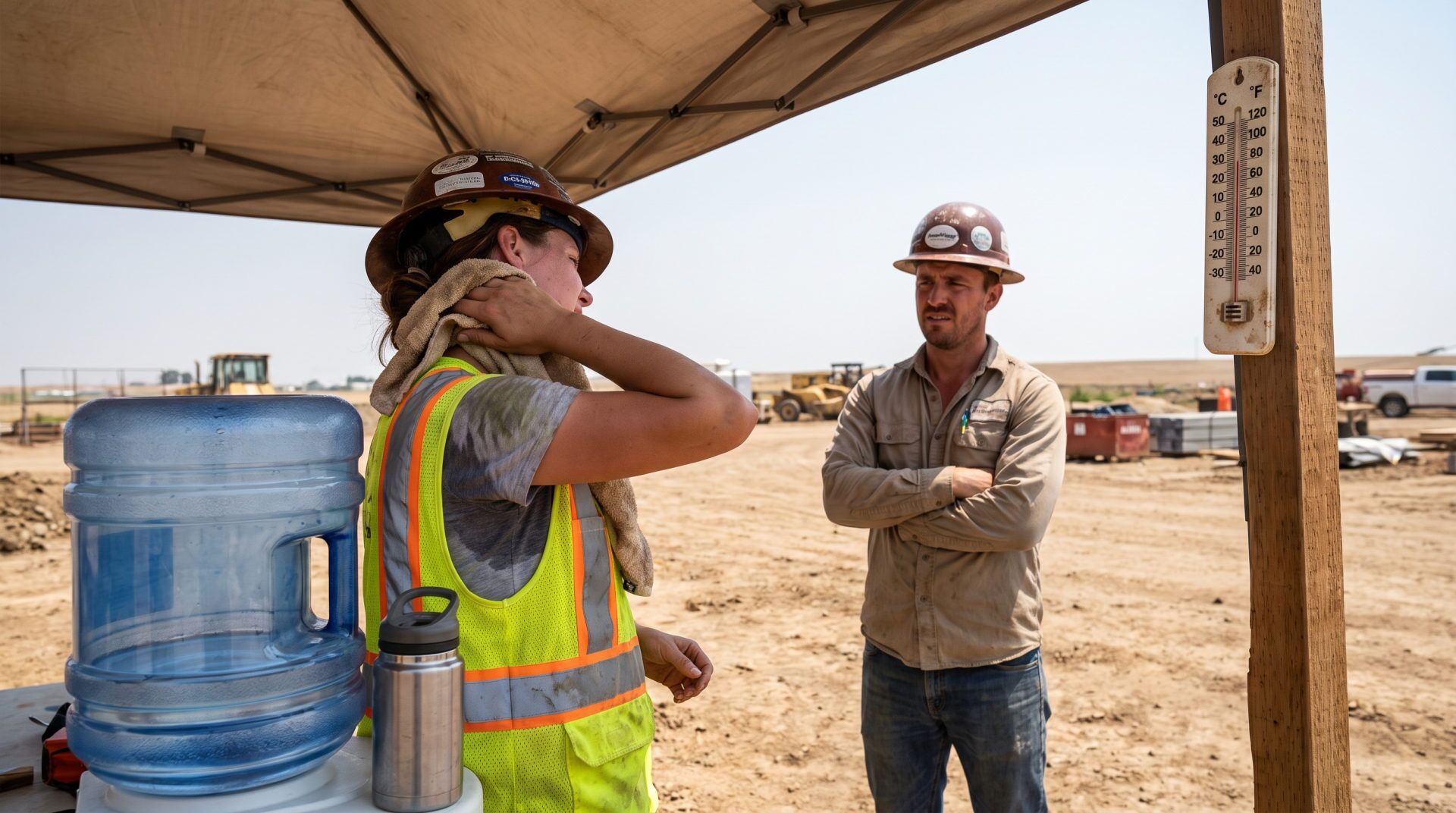
Workers in outdoor environments and uncontrolled indoor spaces may face serious physical risk when temperatures push to either extreme. This heat and cold stress training course gives you the tools to spot early warning signs, take immediate protective action, and get the right help before a situation becomes life-threatening. The course runs 60 minutes and awards a certificate of completion upon passing.
Designed for anyone who works in temperature-variable conditions, this online heat and cold stress course covers how the body responds to thermal stress, the clinical difference between serious heat illnesses, and the prevention steps that keep teams safe through every season.
Course Overview
This heat and cold stress training is built around learning modules that cover both ends of the temperature spectrum:
- Body temperature regulation. The body manages core temperature through physical mechanisms that may be overwhelmed under extreme conditions.
- Warning signs of heat illness. Cramps, exhaustion, and stroke appear at distinct stages and need to be identified early.
- Warning signs of cold illness. Hypothermia and frostbite tend to develop gradually and should be recognized before they become emergencies.
- The clinical distinction between heat exhaustion and heat stroke. This difference determines your first-response action.
- Prevention strategies for heat and cold hazards. Hydration schedules, layering protocols, rest rotation, and exposure limits reduce risk.
- Emergency response steps. Initial assessment through calling 911 follow a clear sequence.
The course treats heat and cold as equally serious workplace hazards. Each receives dedicated coverage designed to help workers act in real conditions.
Every topic connects to a physical action: spotting a symptom, applying a prevention measure, or executing an emergency step. You leave with a response checklist you can use on your next shift.
Every topic connects to awareness that acts fast enough to matter in the field.
What You'll Learn
This heat and cold stress course builds your ability to recognize, prevent, and respond to temperature-related illness on the job.
Body temperature regulation
- Describe how the body regulates its core temperature and why that process breaks down under extreme heat or cold.
- Identify the physical mechanisms the body uses to gain or lose heat, and recognize when those mechanisms are failing.
Recognizing heat and cold illness
- Recognize the warning signs of heat illness, including cramps, exhaustion, and stroke, before they escalate to a medical emergency.
- Recognize the warning signs of cold illness, including hypothermia and frostbite, at the earliest observable stage.
Heat exhaustion versus heat stroke
- Describe the difference between heat exhaustion and heat stroke, including why heat stroke demands immediate 911 contact.
- Apply that distinction to decide the correct first-response action in a field scenario.
Prevention measures for both hazard types
- Identify prevention measures for heat hazards, including hydration schedules, rest rotation, and shade access.
- Identify prevention measures for cold hazards, including layering protocols and exposure time limits.
Emergency response steps
- List the steps to take in a heat or cold emergency, from initial assessment through contacting emergency services.
- Demonstrate when calling 911 is the correct action versus providing first aid on site.
Assessment and completion
- Achieve the 80% pass mark on the final assessment to earn your certificate of completion.
Know the signs, know the steps, and know when to call.
Who Should Take This Course?
- Outdoor workers in variable climates. You may face direct sun, wind, or cold exposure during regular shifts, and recognizing early warning signs before symptoms escalate can make a meaningful difference.
- Construction and trades workers. Your job sites are rarely climate-controlled, and physical exertion raises your heat illness risk significantly on warm days.
- Agricultural and landscaping crews. You work extended hours outdoors across seasons and may not have immediate access to medical support when symptoms appear.
- Warehouse and industrial workers. You work in facilities where temperature extremes build gradually and often go unnoticed until a coworker is already in distress.
- Supervisors and crew leads. You monitor team members and make the call to stop work or contact emergency services when conditions deteriorate.
- Safety coordinators and HR teams. Documented, verifiable heat and cold stress training records are often expected for workers assigned to temperature-variable environments.
Why Take This Course?
Heat stroke and hypothermia develop fast, and both can progress to medical emergencies within hours of first exposure. Workers who can identify the early physical signs act before the situation requires an ambulance.
The gap between exhaustion and stroke can be narrow, and workers who cannot tell the difference risk underreacting at exactly the moment when speed matters most. This course draws that line clearly.
Cold stress can be a hazard teams underestimate because frostbite and hypothermia symptoms tend to build slowly, which may make workers less likely to report them early. Awareness training is the primary defense before cold exposure becomes dangerous.
Sixty minutes protects your whole season. This heat and cold stress online course gives you a structured response framework you apply the next time temperatures push toward either extreme. A certificate will be provided upon successful completion of this course.
Key Benefits
- Certificate of completion included. You receive a shareable credential immediately after passing the assessment, providing a record of your completed heat and cold stress training.
- Spot a medical emergency before it happens. Workers who finish this course are better equipped to recognize heat stroke and hypothermia warning signs early enough to intervene before a coworker needs emergency transport.
- Completed in 60 minutes, fully online. No travel, no classroom, no scheduling conflict. Finish on any device at your own pace and return to any section you need to review.
- Prevention skills that apply year-round. The response framework covers summer heat waves and winter cold snaps equally, so this training stays relevant across every season your crews work outdoors.
- Priced at $29.99 per learner. A fixed, low per-seat cost makes individual enrollment practical without a bulk purchase or organizational contract.
Topics Covered
Course Details
- Duration: Approximately 60 minutes
- Format: Online, self-paced
- Pass mark: 80%
- Certificate: Certificate of completion included
- Price: $29.99
Frequently Asked Questions
How long does the heat and cold stress course take to complete?
The Heat and Cold Stress (OSHA) course is designed to run approximately 60 minutes and is fully self-paced, so you can work through it in a single session or return to it as needed.
What score do I need to pass the heat and cold stress training?
You need to score at least 80% on the final assessment to earn your certificate of completion.
Is a certificate included when I finish the course?
Yes, the Heat and Cold Stress (OSHA) course includes a certificate of completion, issued once you pass the 80% assessment threshold.
How much does this heat and cold stress online course cost?
Enrollment is priced at $29.99 per learner, with no bulk purchase or organizational contract required.
Who should take this heat and cold stress training?
This course is built for anyone who works outdoors or in spaces without climate control, including construction workers, agricultural crews, warehouse staff, and the supervisors responsible for their safety.
Does the course cover both heat illness and cold illness?
Yes, the Heat and Cold Stress (OSHA) course covers both hazard types, including warning signs, prevention measures, and emergency response steps for each.
Enroll in the Heat and Cold Stress (OSHA) course today and earn your certificate of completion in 60 minutes for $29.99.
This course takes approximately 60 minutes to complete
A passing grade of 80% or higher required. Up to 3 attempts are provided.
A certificate will be provided upon the successful completion of this course
