


Course details
Fire Extinguisher Use & Safety (OSHA)
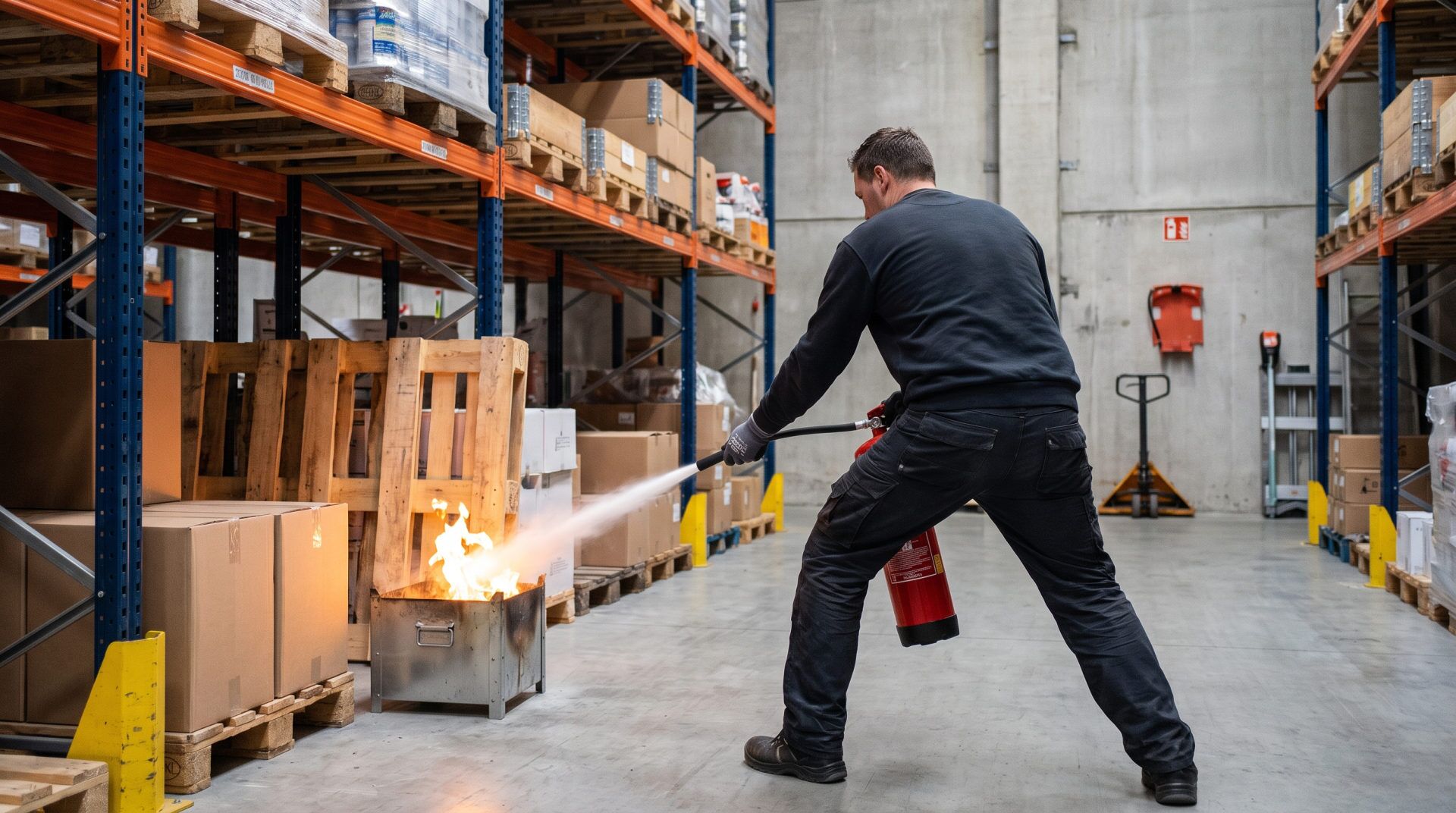
When a small fire breaks out at a worksite, the next 30 seconds determine whether workers contain it or evacuate in chaos. This fire extinguisher use and safety online course gives workers the practical knowledge to read a fire situation, select the right equipment, and act with precision before conditions deteriorate.
Aligned with OSHA 29 CFR 1910.157 and NFPA 10 requirements, the course is built for any worker who may encounter a fire emergency on the job. You leave knowing how to identify fire classes, operate an extinguisher using the PASS method, and complete the correct post-incident documentation steps.
Course Overview
This fire extinguisher use and safety online course is structured around learning modules that walk you through every stage of a fire emergency response. Coverage runs from the moment you spot a flame to the paperwork filed afterward:
- When to use a fire extinguisher (and when not to)
- Risks of using a fire extinguisher
- Employer Emergency Action Plans and evacuation procedures
- The fire triangle
- Classes of fires (A, B, C, D, and K)
- Types of fire extinguishers and extinguishing agents
- Fire extinguisher inspection and placement
- Parts of a fire extinguisher
- The PASS method (Pull, Aim, Squeeze, Sweep)
- Post-fire monitoring, reignition, and documentation
- OSHA 29 CFR 1910.157 and NFPA 10 training requirements
Each module builds from foundational fire science through hands-on technique to regulatory documentation. You finish with a complete operational picture rather than a list of disconnected facts.
Spot the fire, match the extinguisher, and pull the pin.
What You'll Learn
This fire extinguisher safety course equips you to make the right call at every point in a fire emergency, from the first flicker to the final incident report.
Fire behavior and decision-making
- Identify the conditions under which deploying a fire extinguisher is the correct action versus when immediate evacuation is the safer choice.
- Recognize the three elements of the fire triangle and explain how removing any one element suppresses combustion.
- Describe the specific risks that arise from using the wrong extinguisher type on a given fire class.
Fire classification and equipment selection
- Identify each fire class (A, B, C, D, and K) by the materials involved and match each class to the correct extinguishing agent.
- Apply knowledge of extinguisher types and agents to select the appropriate unit for a given workplace fire scenario.
Equipment operation and inspection
- Describe the function of each physical component of a fire extinguisher and demonstrate the PASS method (Pull, Aim, Squeeze, Sweep) step by step.
- Evaluate fire extinguisher placement and inspection records to confirm units meet workplace readiness standards.
Post-incident procedure
- Apply post-fire monitoring steps to detect reignition and initiate recharging or replacement of a discharged unit.
- Work through the documentation requirements that follow a fire extinguisher deployment, producing a complete incident record.
Regulatory compliance and employer obligations
- Identify the training requirements set out in OSHA 29 CFR 1910.157 and NFPA 10 and describe how this course addresses them.
Assessment and completion
- Demonstrate mastery of course content by achieving the 80% pass mark on the final assessment to earn a certificate of completion.
Who Should Take This Course?
- Frontline workers in fire-risk environments. You are first on scene when a small fire ignites and need to act correctly before emergency services arrive.
- Warehouse and manufacturing personnel. You work near flammable materials, machinery, or chemical storage where Class B, C, or D fire risks are present daily.
- Facility and maintenance technicians. You handle fire extinguisher inspection, placement compliance, and post-incident recharging documentation as part of your regular duties.
- Health and safety coordinators. You need a documented training record for your workforce to satisfy OSHA 29 CFR 1910.157 and NFPA 10 requirements.
- Supervisors and team leads. You oversee emergency action plan execution and must confirm your team knows when to fight a fire and when to evacuate.
- Any employee in a workplace with portable fire extinguishers. You have not received formal instruction on fire classes, extinguisher selection, or the PASS method.
Why Take This Course?
OSHA 29 CFR 1910.157 requires this training. Employers must train workers who are expected to use portable fire extinguishers. NFPA 10 sets parallel requirements for inspection and maintenance knowledge. This course addresses both standards directly.
The wrong extinguisher makes a fire worse. A worker who grabs the nearest unit without knowing the fire class can accelerate a blaze or create a chemical hazard where none existed. This course covers agent-to-fire matching before you ever pull the pin.
Emergency Action Plans fail without trained workers. Your organization's evacuation procedure depends on workers knowing exactly when to attempt suppression and when to trigger egress. That decision requires specific knowledge of fire behavior and extinguisher limitations.
Post-incident steps are routinely skipped. Monitoring for reignition, recharging discharged units, and completing documentation are often missed because workers were never taught them. This course covers each step so your organization keeps both physical readiness and a paper trail intact. Tools like BIS Training Record Management make storing those completion records straightforward.
Key Benefits
- Certificate of completion issued on passing. You receive a dated credential organizations can file as proof of OSHA 29 CFR 1910.157 and NFPA 10 training compliance.
- Eliminates the cost of a wrong extinguisher choice. You learn to match fire class to agent before pulling the pin, preventing property damage and secondary chemical hazards on the floor.
- Completed in 30 minutes, fully online. You finish the fire extinguisher use and safety course during a single shift break with no travel, scheduling, or classroom overhead required.
- Skills apply to every fire class on the job. The course covers Classes A, B, C, D, and K alongside the specific agents and equipment matched to each, so no scenario catches you unprepared.
- Priced at $29.99 per learner. Organizations training large teams get a cost-accessible compliance solution without a prohibitive per-seat budget.
Topics Covered
Course Details
- Duration: 30 minutes, completed entirely online at your own pace
- Price: $29.99 per learner
- Pass mark: 80% on the final assessment
- Certificate: Certificate of completion issued on passing
- Regulatory alignment: OSHA 29 CFR 1910.157 and NFPA 10 training requirements
Frequently Asked Questions
How long does the fire extinguisher use and safety course take to complete?
The fire extinguisher use and safety course takes 30 minutes and is completed entirely online at your own pace.
What score do I need to pass the fire extinguisher safety course?
You need 80% or higher on the final assessment to pass and receive your certificate.
Is a certificate issued when I complete the fire extinguisher training?
Yes, the fire extinguisher use and safety course includes a certificate of completion issued to every learner who passes the 80% assessment.
Which fire classes does this course cover?
The course covers Classes A, B, C, D, and K, including the extinguisher types and extinguishing agents matched to each class.
Who should take this fire extinguisher use and safety online course?
The course is designed for any worker in a workplace where portable fire extinguishers are present. That includes frontline employees, maintenance technicians, supervisors, and health and safety coordinators who need documented training records.
Does this course address OSHA 29 CFR 1910.157 and NFPA 10 training requirements?
Yes, the course includes a dedicated module on OSHA 29 CFR 1910.157 and NFPA 10 training requirements and is structured to address the training obligations both standards establish.
Enroll in the Fire Extinguisher Use & Safety (OSHA) course today and give your workers the skills and documented credential to respond correctly when it counts.
This course takes approximately 30 minutes to complete
A passing grade of 80% or higher required. Up to 3 attempts are provided.
A certificate will be provided upon the successful completion of this course
