


Course details
Lead Safety (OSHA)
Workers who handle lead-containing materials may encounter a hazard that builds gradually in the body, with effects that can develop before any symptom is noticed. This lead safety training course gives you the practical knowledge to recognize lead hazards, read monitoring results, and apply the right controls before exposure becomes a health event. This course covers exposure pathways, the regulatory framework, and personal protective equipment selection in a single 60-minute online session, with a certificate of completion issued upon passing.
Course Overview
This lead safety course is organized into learning modules that address the science, the regulations, and the hands-on controls workers apply on the job. Each topic builds on the last, moving from foundational knowledge through to practical application on the job site.
The modules address what lead is and the physical forms it takes in workplace settings, where lead can be found from paint and pipes to soil and batteries, the health risks associated with lead exposure across multiple body systems, and the regulatory framework that governs how lead is handled and controlled. You'll also learn the three pathways through which lead can enter the body, how to identify lead hazards in the workplace before exposure occurs, the monitoring methods used to measure and track lead exposure levels, the hierarchy of controls applied to reduce lead exposure risk, and the personal protective equipment used when working with lead.
By the end of the session, you will be familiar with the science behind lead hazards and the compliance framework that applies to lead work in the United States.
What You'll Learn
This lead safety course takes you from understanding what lead is to selecting the right PPE for the specific task in front of you.
Lead fundamentals and where it hides
- Describe what lead is, including the physical forms it takes in industrial and construction environments.
- Identify the locations where lead is commonly found, including lead paint, pipes, soil, and batteries.
Health risks and exposure pathways
- Recognize the three pathways through which lead enters the body and explain why each pathway requires a different control response.
- Describe the health risks associated with lead exposure, including effects on the nervous, reproductive, and cardiovascular systems.
Regulations and compliance obligations
- Review the regulations and guidance that apply to lead use and understand the framework for employer and worker obligations.
Workplace hazard identification
- Identify lead hazards across a range of materials and work activities before exposure occurs.
- Apply a systematic approach to recognizing lead-containing materials before work begins.
Monitoring, controls, and PPE selection
- Explain the monitoring methods used to measure lead exposure levels and interpret what those results mean for worker protection.
- Practice applying the hierarchy of controls to a lead-exposure scenario, identifying an appropriate risk-reduction measure for the situation.
- Select and properly use personal protective equipment when working with lead, matching PPE type to the specific exposure risk.
Assessment and certification
- Demonstrate retention of course content by achieving the 80% pass mark on the end-of-course assessment.
- Receive a certificate of completion upon passing the end-of-course assessment for this OSHA-aligned lead safety course.
Who Should Take This Course?
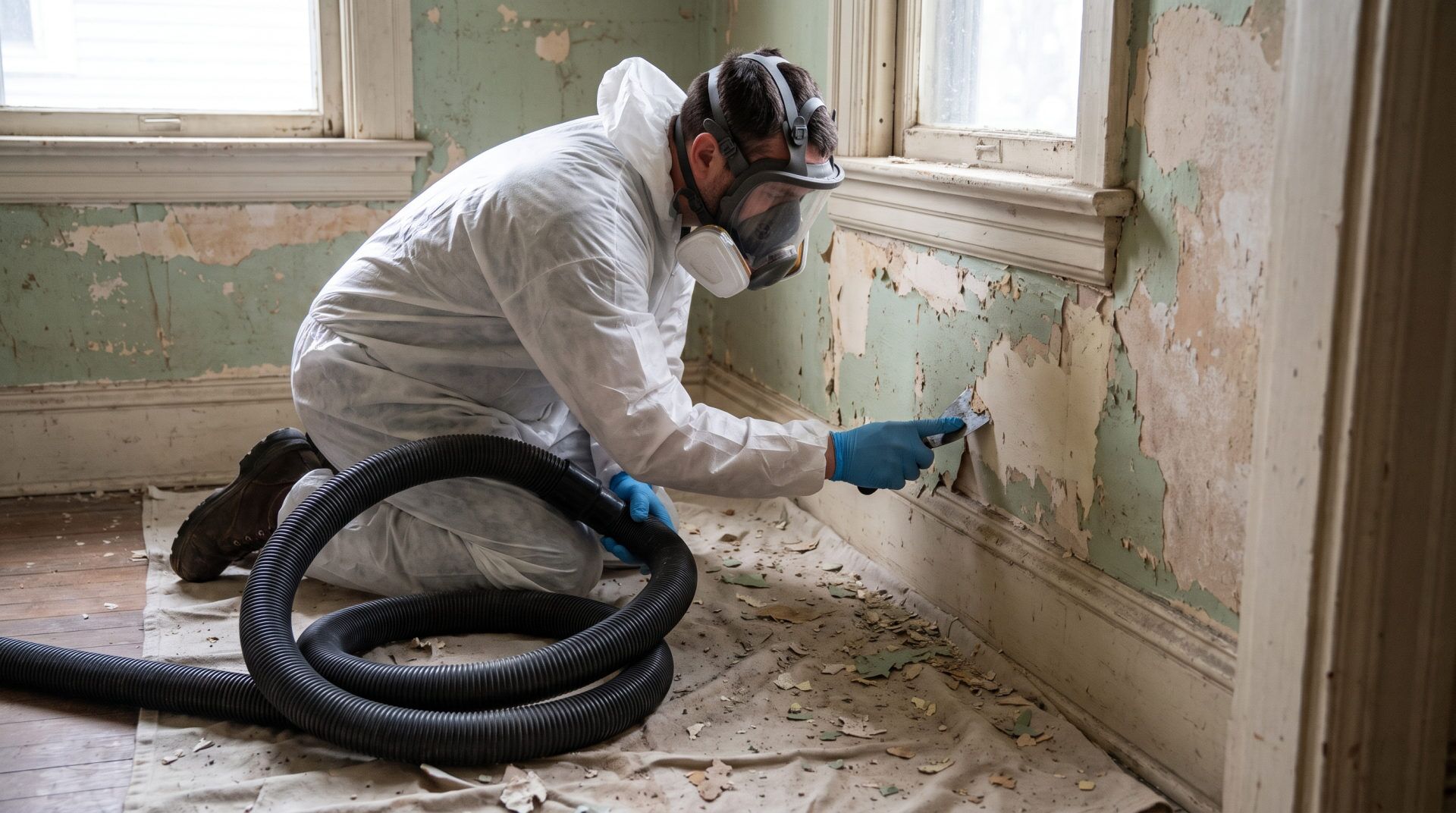
- Construction and renovation workers. You may disturb lead paint, lead-containing plaster, or lead-based coatings during demolition, sanding, or cutting tasks, making documented lead safety training relevant to your work.
- Plumbers and pipefitters. You work with lead pipes, lead solder, or lead-lined fixtures in older residential and commercial buildings where exposure risk is routine.
- Industrial and manufacturing workers. You handle lead-acid batteries, lead alloys, or lead compounds as part of regular production or maintenance activities.
- Supervisors and site leads. You identify hazards, enforce controls, and are often responsible for confirming that workers on your crew hold a documented lead safety credential.
- Health and safety coordinators. You need a reliable, certificate-bearing online lead safety course you can assign across multiple sites and trades.
- Workers new to lead-exposure roles. A structured introduction to the regulations, monitoring processes, and protective measures that apply to your work gives you a foundation before your first exposure task.
Why Take This Course?
Lead exposure can be cumulative and difficult to detect, and a worker who is unfamiliar with exposure pathways, cannot interpret a monitoring result, or selects the wrong respirator may face increased risk over time. OSHA's lead standards exist precisely because that accumulation is irreversible.
The course covers the full chain of risk. You learn the physical properties that make lead persistent in the environment, the biological mechanisms that make low-level exposure dangerous over time, and the specific controls that interrupt exposure before it reaches your bloodstream.
Documented training protects workers and employers. Organizations operating in industries where lead is present face serious liability when workers are exposed without adequate training on record. The certificate of completion from this lead safety OSHA course gives employers a concrete, verifiable record that training occurred and that the worker passed the 80% assessment threshold.
The skills transfer beyond this job site. The hierarchy of controls covered here is the same framework safety professionals apply to every hazardous substance. You carry that decision-making structure into every future role where hazardous materials are present.
Key Benefits
- Certificate of completion included upon passing. Workers receive a verifiable credential after meeting the 80% pass mark, giving employers a physical training record that a toolbox talk cannot provide.
- Neurological, reproductive, and cardiovascular harm reduced. The course equips you to interrupt lead exposure before it accumulates to levels that damage organ systems, preventing the kind of harm that cannot be undone.
- Sixty-minute online format with no scheduling overhead. You complete the entire lead safety training in a single session with no travel, no classroom booking, and no crew pulled off the floor for more than one hour.
- Controls and PPE skills that carry across every future role. The hierarchy of controls and PPE selection methods taught here apply on every job site where lead-containing materials appear, not only your current position.
- OSHA-compliant lead safety training at $49.99.
Topics Covered
Course Details
- Course length: 60 minutes
- Format: Online, self-paced; passing mark 80%
- Certificate: Certificate of completion included upon passing
- Compliance: OSHA compliant
- Price: $49.99
Frequently Asked Questions
How long does the lead safety OSHA course take to complete?
The Lead Safety (OSHA) course takes 60 minutes in total and is designed to be completed in a single online session at your own pace.
What score do I need to pass the lead safety course?
You need 80% to pass. Workers who meet or exceed that score on the end-of-course assessment receive their certificate of completion immediately.
Is a certificate included when I finish the lead safety training?
Yes, the Lead Safety (OSHA) course includes a certificate of completion, issued to you upon successfully passing the 80% assessment.
Who should take this lead safety online course?
This lead safety training is suited for workers who may encounter lead on the job, including construction workers, plumbers, industrial workers, supervisors, and safety coordinators who document crew training across sites.
How much does the lead safety OSHA course cost?
The course is priced at $49.99, which covers the full 60-minute training session and the certificate of completion, with no subscription required.
Enroll in the Lead Safety (OSHA) course today and give your workers the documented training and certificate they need to identify hazards, apply controls, and work safely around lead.
This course takes approximately 60 minutes to complete
A passing grade of 80% or higher required. Up to 3 attempts are provided.
A certificate will be provided upon the successful completion of this course
