


Course details
Sit-Down Counterbalanced Forklift Operator Safety (OSHA)
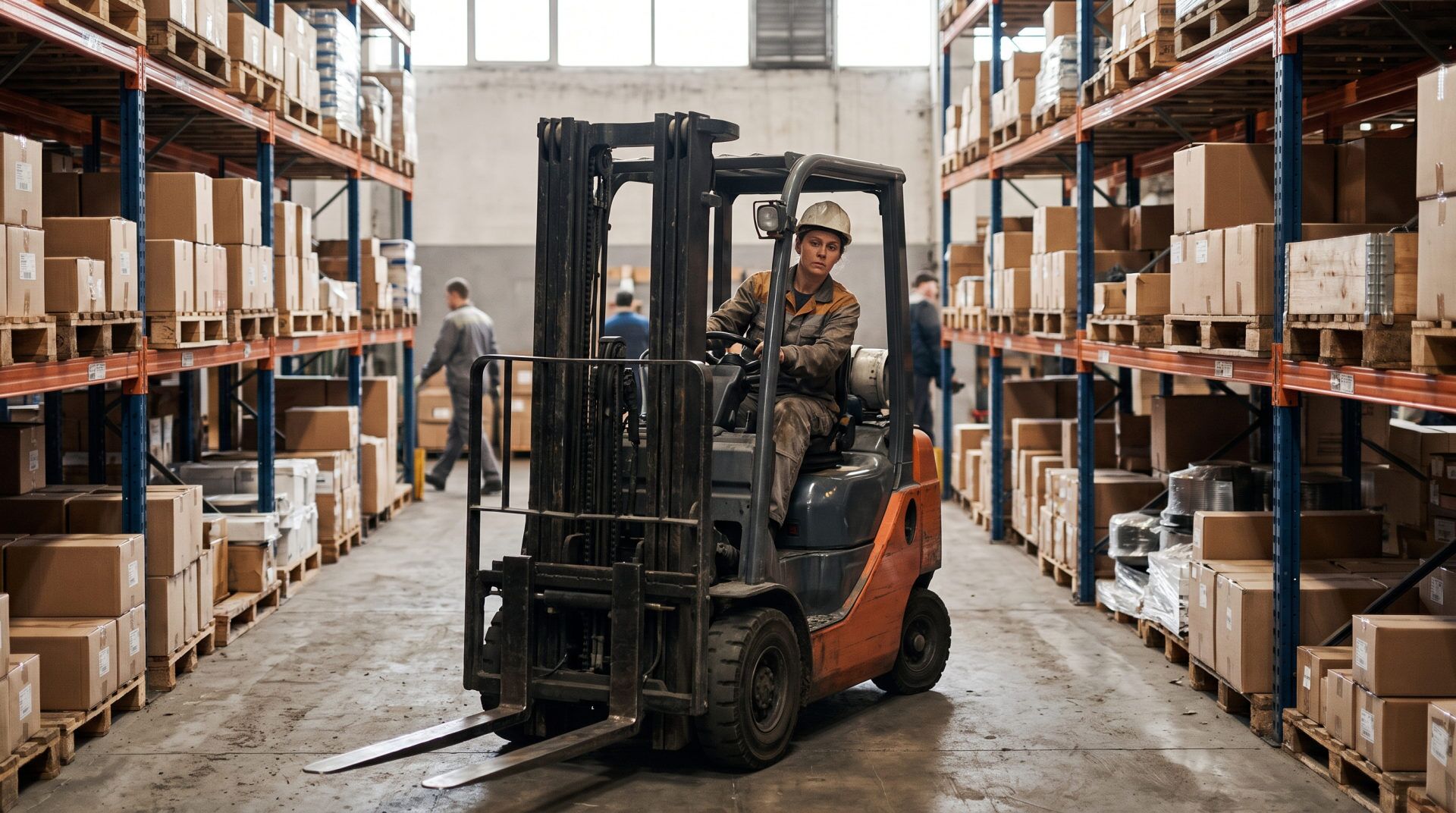
A counterbalanced forklift can move in minutes what a crew would spend hours doing by hand. That same machine can seriously injure or kill an operator who skips the fundamentals. This sit-down counterbalanced forklift operator safety course is designed to walk workers through machine identification, safety features, pre-operation inspection steps, and the movements that distinguish safe from unsafe operation before they ever climb into the seat.
Course Overview
This sit-down counterbalanced forklift operator safety course covers the foundational knowledge operators typically need before practical training begins. The modules address machine identification and component recognition, forklift safety features and their functions, pre-operation inspection procedures, and the distinction between safe and unsafe forklift use and movements.
The course is intended to precede practical operator training and site-specific training. Workers who complete it before hands-on sessions may arrive with foundational knowledge already in place, giving supervisors more time to focus on skills that require the machine to be running. Learners work at their own pace, complete a graded assessment, and receive a certificate of completion upon passing.
Know the machine, the inspection sequence, and the rules before the shift starts.
What You'll Learn
This forklift operator safety course moves from machine recognition through to a graded assessment on safe and unsafe operation.
Machine identification and components
- Recognize a counterbalanced forklift and distinguish it from other powered industrial trucks by its design and configuration.
- Identify the key components of a sit-down counterbalanced forklift and describe the function each part performs during operation.
Safety features and their functions
- Name the safety features built into a counterbalanced forklift and explain what each one is designed to prevent.
- Describe how safety features interact during normal operation and what an operator should check to confirm they are functioning correctly.
Pre-operation inspection steps
- Describe the steps of a pre-operation inspection in sequence, covering both mechanical and safety-related checklist items.
- Apply inspection criteria to assess whether a forklift is fit for use or should be taken out of service before a shift begins.
Safe vs. unsafe forklift use and movements
- Recognize the difference between safe and unsafe forklift use and movements across loading, travel, and stacking scenarios.
- Evaluate operator decisions and load-handling techniques to identify which practices create hazards and which ones control them.
Assessment and completion
- Demonstrate knowledge of all course topics by achieving a pass mark of 80% on the final assessment.
- Earn a certificate of completion upon passing, which documents successful completion of this online operator safety course.
Named parts, a completed checklist, and a documented pass.
Who Should Take This Course?
- New forklift operators scheduled for practical training who need the foundational knowledge to make that hands-on time count.
- Workers transitioning to forklift duties who are moving into a role that involves operating a sit-down counterbalanced forklift for the first time.
- Warehouse and distribution workers whose daily tasks involve loading, unloading, or stacking with a counterbalanced forklift.
- Construction and industrial site workers who use counterbalanced forklifts to move materials, equipment, or supplies across job sites.
- Safety coordinators and supervisors who want their teams to complete structured online instruction before beginning site-specific or practical operator training.
- Employers building a forklift safety program who want a documented, online training component that workers can complete before they begin hands-on sessions.
Why Take This Course?
Forklifts are among the most dangerous powered equipment on a job site. Tip-overs, struck-by incidents, and load failures are among the most serious outcomes of uninformed forklift operation. Workplace safety regulations across jurisdictions require operators to be trained and evaluated before operating a forklift.
Operators who skip foundational instruction arrive unprepared. Without the vocabulary, the inspection habits, and the ability to recognize a hazardous movement, a new operator can become a risk to others on the floor, not just themselves.
This course builds the knowledge base operators need before they sit down. You learn the machine, its safety systems, the inspection sequence, and the line between a safe movement and a dangerous one.
Completing this online training before practical sessions pays off immediately. Supervisors recover hands-on time that would otherwise go to explaining basics, and operators arrive ready to practice skills rather than absorb definitions.
Key Benefits
- Certificate of completion included. You receive a documented credential upon passing the 80% assessment, giving your employer a record of this completed online counterbalanced forklift safety course.
- Builds hazard awareness around tip-overs and struck-by incidents. Operators who can identify unsafe movements before practical training are better positioned to avoid creating those hazards on the warehouse or job-site floor.
- Completed in 45 minutes, entirely online, on any device. You finish this sit-down counterbalanced forklift operator safety course without pulling a machine off the floor or booking a classroom session.
- Foundational knowledge that transfers across industries. The inspection steps and safe-movement principles covered here apply wherever counterbalanced forklifts operate, from distribution centers to construction sites.
- Priced at $49.99 per learner. Organizations train individual operators or scale across a full team at a fixed, predictable cost with no scheduling overhead.
Topics Covered
Course Details
- Duration: 45 minutes
- Format: Online, self-paced
- Pass mark: 80%
- Attempts: 3
- Certificate: Certificate of completion included
- Price: $49.99
- Scope: Designed to precede practical operator training and site-specific training, not a standalone substitute for hands-on qualification
Frequently Asked Questions
How long does the sit-down counterbalanced forklift operator safety course take to complete?
The course takes 45 minutes to complete. You work at your own pace and can stop and resume as your schedule allows.
What score do I need to pass the forklift operator safety course?
You need to achieve a pass mark of 80% on the final assessment. Learners who do not reach that mark can review the material and retake the assessment.
Is a certificate included when I complete the counterbalanced forklift safety training?
Yes, the Sit-Down Counterbalanced Forklift Operator Safety course includes a certificate of completion for every learner who passes the 80% assessment.
How much does the counterbalanced forklift operator safety course cost?
The course is priced at $49.99 per learner, with no additional scheduling or classroom costs.
Who should take this sit-down counterbalanced forklift operator safety course?
This course is designed for anyone preparing to operate a sit-down counterbalanced forklift, including new operators, workers transitioning into forklift roles, and teams completing structured online instruction before practical or site-specific training.
Does this online course replace practical forklift operator training?
No. This sit-down counterbalanced forklift operator safety course is explicitly designed to precede practical and site-specific training. It gives operators the foundational knowledge that makes hands-on sessions more effective, not a substitute for them.
BIS Safety Software's Training Record Management system lets you store and retrieve your workers' certificates whenever an audit or job site asks for them.
Enroll in the Sit-Down Counterbalanced Forklift Operator Safety course today and give your operators the knowledge they need before practical training begins.
This course takes approximately 45 minutes to complete
A passing grade of 80% or higher required. Up to 3 attempts are provided.
A certificate will be provided upon the successful completion of this course

